Brakes rarely fail without warning. Noises, vibrations, a change in pedal feel or a light on the dash are your car’s way of telling you something needs attention. If you drive a Volvo, Volkswagen, Audi, BMW, Mercedes or another European car, here are the signs it’s time for European car brake repair in Perth, and why these cars’ brakes wear a little differently.
What are the warning signs your brakes need work?
Book your car in promptly if you notice any of the following. Catching a problem early is safer and usually makes the repair simpler.
1. Squealing, grinding or scraping when you brake
Squealing often means the pads are worn and due for replacement. Grinding usually means the pads are worn right down and the discs may be getting damaged. Either way, have it checked straight away: ignoring it makes the repair more expensive and less safe.
2. Shudder or vibration through the pedal or steering wheel
Brake shudder is usually caused by warped or uneven discs (rotors). You’ll typically feel it when slowing from highway speed. We diagnose the cause and can fit quality components that resist shudder, so braking feels smooth again.
3. A soft, spongy or low brake pedal
If the pedal feels soft or travels further than it used to, there may be air or moisture in the brake fluid, a fluid leak or a problem with the hydraulic system. This needs checking before you drive further than you have to.
4. A brake warning light or pad wear message
Many European cars use electronic brake pad wear sensors. When the pads wear down to a set point, the sensor triggers a warning on the dashboard. Don’t ignore it: it’s an early warning that the pads are nearing the end of their life. A warning light can also point to low brake fluid or another fault, so have it checked to find out which.
5. Longer stopping distances
If your car takes longer to pull up, or you find yourself pressing harder than usual, the pads, discs or fluid may need attention.
6. Excessive black brake dust on your wheels
Some dust is normal, but heavy black dust that builds up quickly is common on European cars and shows the pads and discs are wearing. It’s also a hint that a different pad could suit you better (more on that below).
Why do European car brakes wear differently?
European cars are designed to stop strongly and consistently, and their factory brake pads tend to put strong braking performance first. The trade-off on many models is more brake dust and wear on the discs as well as the pads. That’s why it’s common for European cars to need discs replaced along with pads, rather than pads alone.
Pad wear sensors are another difference. Because the sensor is designed to be worn through when the pads reach their limit, it’s usually replaced at the same time as the pads.
How quickly brakes wear depends on your car, your brakes and how you drive. Many cars need front pads somewhere between 40,000km and 70,000km. Stop-start traffic and lots of short trips around Perth wear brakes faster than steady highway driving.
Signs at a glance
| What you notice | Likely cause | How urgent |
|---|---|---|
| Squealing | Worn pads | Book in soon |
| Grinding or scraping | Pads worn right down, discs at risk | Have it checked straight away |
| Shudder or vibration | Warped or uneven discs | Book in soon |
| Soft or spongy pedal | Air or moisture in fluid, leak or hydraulic fault | Have it checked straight away |
| Pad wear warning | Pads near the end of their life | Book in soon |
| Heavy black dust | Pad and disc wear | Check at your next service |
What’s involved in European car brake repair?
Every brake job starts with a proper inspection. Depending on what we find, the work may include:
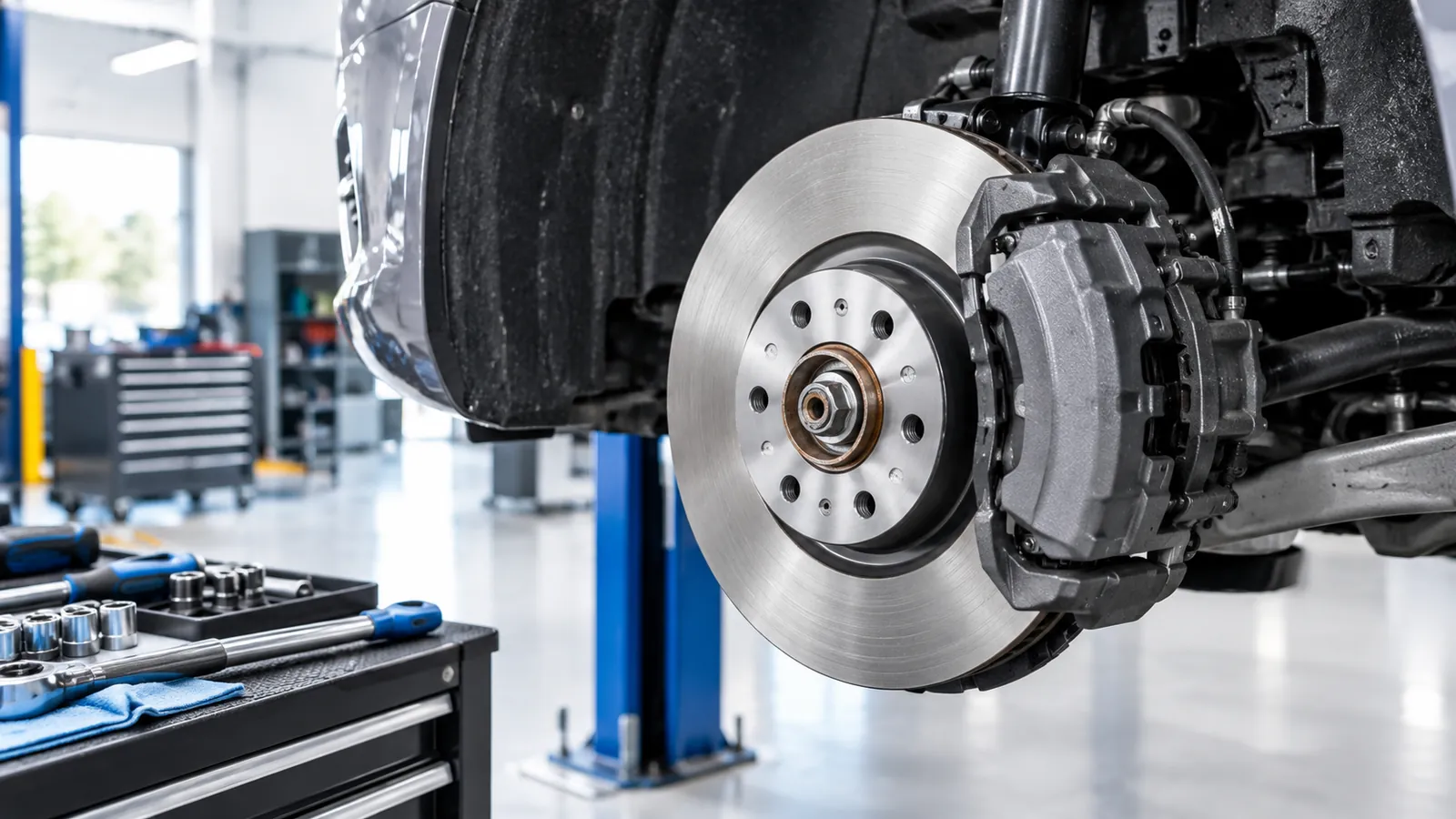
- Brake pad and disc (rotor) replacement
- Replacing pad wear sensors where fitted
- A brake fluid flush and replacement
- Brake caliper service and repair
- Brake shudder and vibration diagnosis
- Handbrake and park brake adjustment
We’ll give you honest advice on what needs doing now and what can wait, and quote before any work begins.
Why does brake fluid matter?
Brake fluid absorbs moisture over time, which reduces braking performance. Most manufacturers recommend a brake fluid flush every two years. We check and replace brake fluid as part of servicing, so it’s worth keeping up with your log book service.
What brake parts do we fit?
We’re an accredited ATE Brake Centre. ATE, part of the Continental AG group, makes brake components fitted as original equipment to Volvo, BMW, Audi, Volkswagen, Mercedes-Benz and most other European vehicles, so you get the quality the manufacturer intended.
If brake dust is your bugbear, ask us about ATE ceramic brake pads. They keep your wheels clean, are virtually noise-free, resist shudder and come with a 3-year or 50,000km warranty. Find out more on our brake service and repairs page.
Book your European car brake repair in Perth
Noticed a noise, a shudder or a warning light? Don’t wait. Our team services and repairs brakes on Volvo, Volkswagen, Audi, BMW, Mercedes, Mini, Skoda and Range Rover vehicles at 76 Albert Street, Osborne Park. Book online or call us on (08) 9227 9944.
Frequently asked questions
How often should brake pads be replaced on a European car?
It depends on your car, your brakes and how you drive, but many cars need front pads somewhere between 40,000km and 70,000km. Regular brake inspections, which we include as part of servicing, mean pads and discs are replaced before they become unsafe.
Why are my brakes squealing or grinding?
Squealing often means the pads are worn and need replacing. Grinding usually means the pads are worn right down and the discs may be getting damaged. Either way, have them checked promptly.
What causes brake shudder?
Brake shudder through the pedal or steering wheel is usually caused by warped or uneven discs. We diagnose the cause and fit quality components that resist shudder.
How often should brake fluid be changed?
Most manufacturers recommend a brake fluid flush every two years, because brake fluid absorbs moisture over time, which reduces braking performance.
Are ceramic brake pads worth it?
For most drivers, yes. ATE ceramic pads keep your wheels clean, are virtually noise-free, don’t shudder, last a long time and come with a 3-year/50,000km warranty.